

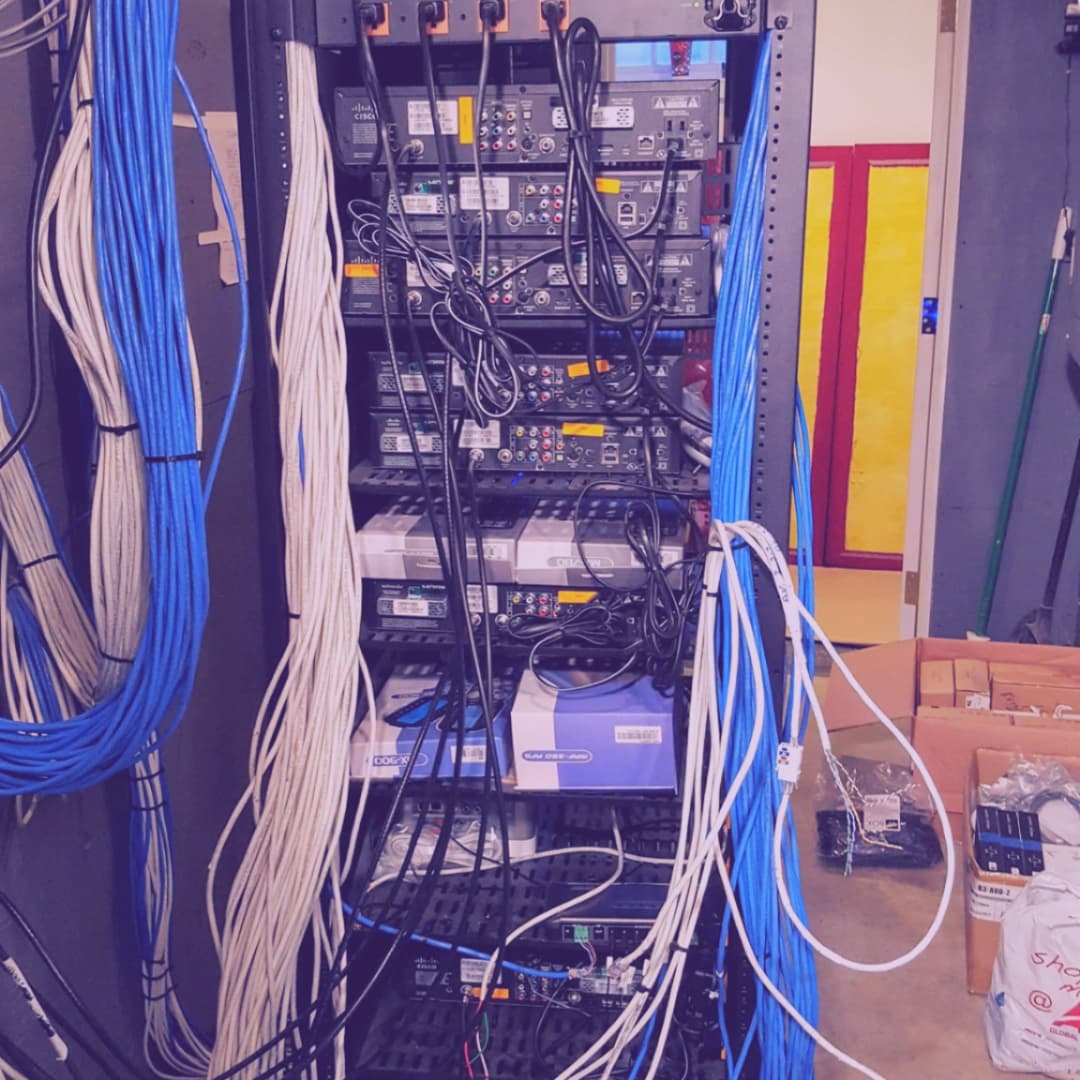
- Quick summary
- What do shielded and unshielded Ethernet cable actually mean?
- When is unshielded cable the right answer?
- When does shielded cable make sense?
- Why grounding changes the decision
- Common mistakes in homes and offices
- How to read this on a quote
- Recommended gear
- Shielded vs unshielded checklist
- FAQs
- References
This guide explains when shielded cable is useful, when unshielded cable is the better choice, and why the grounding plan matters as much as the cable itself.
Quick summary
For most homes and many normal offices, unshielded Ethernet cable is the right answer. Shielded Ethernet cable makes sense when the route is exposed to meaningful electrical noise and the design includes the correct shielded terminations and grounding path.
| Type | What it means | Best fit | Complexity | Cost | Typical recommendation |
|---|---|---|---|---|---|
| Unshielded | No foil or braid shielding around the data pairs | Most homes, ordinary offices, standard riser and plenum pathways with no unusual EMI exposure | Lower | Usually lower | Use as the default starting point unless the route has a specific interference problem. |
| Shielded | Cable includes foil or braid shielding to reduce external noise pickup | Industrial-adjacent pathways, electrical-heavy environments, some dense commercial Cat6A runs | Higher because grounding and shield continuity matter | Usually higher | Use only when the route and environment justify it and the full grounding plan is clear. |
In practical terms, shielding is not a speed upgrade. It is a noise-control and grounding decision. If you are comparing broader cable decisions, pair this with our Cat6 vs Cat6A guide, Cat6 cable installation guide, how to wire a home for Ethernet, and home network rack setup guide.
What do shielded and unshielded Ethernet cable actually mean?
The difference between shielded and unshielded Ethernet cable is the presence of metallic shielding intended to reduce external electromagnetic interference.
The most common terms readers see are:
- UTP or U/UTP for unshielded twisted pair
- F/UTP for overall foil shielding around the twisted pairs
- other shielded constructions that add more shielding depending on the cable design
The important point is that shielding changes more than the spool. Once shielding is part of the design, the terminations and bonding path matter too.
This is why the decision is often oversimplified online. A shielded spool by itself does not create a well-designed shielded channel. The installer still has to preserve shield continuity through the jacks, patch panel, and grounding path.
Current trueCABLE Cat6A riser products make the comparison easy to understand because the same general Cat6A category is sold in both unshielded and shielded versions. That shows the real decision clearly: category and shielding are separate choices.
When is unshielded cable the right answer?
Unshielded cable is the right answer for most structured cabling work in homes and many offices.
That includes:
- single-family homes with ordinary wall, attic, basement, and closet pathways
- typical office suites with standard wall cavities and ceiling paths
- rack-to-jack structured cabling where the route is not exposed to unusual electrical noise
- normal retrofit work where simplicity, reliability, and clean terminations matter more than theoretical over-specing
This is the reason most residential structured cabling proposals should start with unshielded Cat6 or Cat6A, not shielded cable.
In real projects, unshielded cable is usually the better answer because:
- it is simpler to terminate correctly
- it avoids unnecessary grounding complexity
- it is often less expensive
- it is already appropriate for the vast majority of interior pathways
- it is usually easier to pull through finished walls, crowded conduit, and tight residential pathways
For Westchester homes and small offices, this is the normal baseline. Most projects are limited by access, pathway quality, wall finish constraints, and rack planning, not by a lack of cable shielding.
When does shielded cable make sense?
Shielded cable makes sense when the route is exposed to meaningful electrical noise and the installation is designed as a shielded system from end to end.
Examples include:
- pathways close to large motors, VFDs, or industrial machinery
- cable runs that must stay near heavy electrical equipment for part of the route
- dense commercial environments where Cat6A bundling and alien crosstalk (ANEXT) control are both part of the design
- certain data, medical, manufacturing, or equipment-room installations where shielding is already part of the spec
Shielded cable can also appear in commercial specs simply because the engineer wants a consistent standard for a particular environment. That can be reasonable, but it should still be tied to the pathway and the grounding design rather than treated as a universal upgrade.
Choose shielded cable because the route requires it, not because the project sounds more professional with shielded cable on the quote.
Shielded cable also tends to be a little less forgiving physically. In field work, shielded Cat6A is usually thicker and stiffer than the comparable unshielded cable, which makes it less pleasant to pull through tight conduit, crowded studs, and finished-wall retrofit paths.
Current trueCABLE pricing is a useful benchmark here. On April 13, 2026, the company listed Cat6A riser unshielded at $303.99 and the comparable Cat6A riser shielded at $357.99. That is not a huge premium on a one-box decision, but it becomes more noticeable once shielding also pulls in different jacks, patch panels, and grounding work.
Why grounding changes the decision
Grounding is what turns shielded cable from a product choice into a system choice.
If the project uses shielded cable, the installation normally also needs:
- shielded jacks or connectors
- a shielded patch panel or other bonded termination point
- a rack or bonding path that is actually designed to carry that shield to ground
trueCABLE's current shielded patch panel page is useful because it says the panel is required to properly ground shielded Ethernet cable and keystone jacks and includes a ground wire to bond the patch panel to the rack or rack busbar. That is exactly the kind of product language that helps readers understand the real issue.
The practical takeaway is simple: shielded cable is not a standalone upgrade.
Ground loops are part of this discussion as well. trueCABLE's residential grounding guidance notes that ground-loop problems arise when shielded cabling is tied into conflicting AC ground systems, such as separate grounding systems between structures. In normal single-structure work, the goal is a consistent bonding path tied back to the same grounding system, not improvised grounding points.
If someone proposes shielded cable but does not mention:
- shielded terminations
- shielded patch hardware
- bonding or grounding
- how the shield is carried through the rack
then the proposal is incomplete.
This is also where many normal home projects go sideways. A homeowner buys shielded spool cable online, uses ordinary unshielded keystones, and ends up paying more for a design that did not solve an actual problem.
Common mistakes in homes and offices
The most common mistake is choosing shielded cable for a normal environment that does not need it.
Other common mistakes include:
- using shielded cable with unshielded jacks and expecting a full shielded channel
- assuming shielding will fix packet loss caused by bad terminations or damaged cable
- using shielded cable as a substitute for better pathway separation from electrical lines
- assuming shielded cable is automatically faster than unshielded cable
- treating shielded cable as a premium line item without explaining why the route needs it
In homes, shielding is often oversold because it sounds like a premium choice. In offices, it is sometimes copied from a generic commercial standard without checking whether the actual suite needs it.
The better approach is to start with the route:
- Is there real EMI exposure?
- Is the cable forced to stay near electrical equipment?
- Is a shielded system being designed all the way through the rack?
If the answer is no, unshielded is usually the cleaner recommendation.
How to read this on a quote
If shielded cable appears on a proposal, the right question is not "Is shielded better?" The right question is "Why is shielding required on this route?"
A clear quote should identify:
- which pathways are considered electrically noisy
- whether shielding is being specified by the installer, engineer, landlord, or project standard
- what shielded hardware is included at the terminations
- how the rack, patch panel, or bonding path will be handled
Helpful signs:
- the quote explains the actual interference or pathway reason for shielding
- the scope includes shielded jacks, patch panel hardware, and bonding language
- the installer can describe why unshielded would or would not be appropriate
Warning signs:
- shielded cable appears as a vague premium upsell with no route explanation
- the scope lists shielded cable but ordinary unshielded termination hardware
- the installer talks about shielding as if it automatically improves speed
- no one can explain how the shield will be bonded at the rack
This is the same reason we push for route-specific scope language in network cabling cost and how to choose a network installation company. Good proposals explain the pathway logic, not just the material list.
Recommended gear
Use TRUE CABLE Cat6A Riser Cable (UTP), 1000 ft as the baseline unshielded reference, trueCABLE Cat6A Shielded Riser Cable, 1000 ft as the shielded comparison point, and a Shielded 24-Port Keystone Patch Panel as the reminder that shielding is a full channel decision. For close-out testing, a Klein Tools VDV526-100 LAN Cable Tester covers basic continuity and pinout checks.
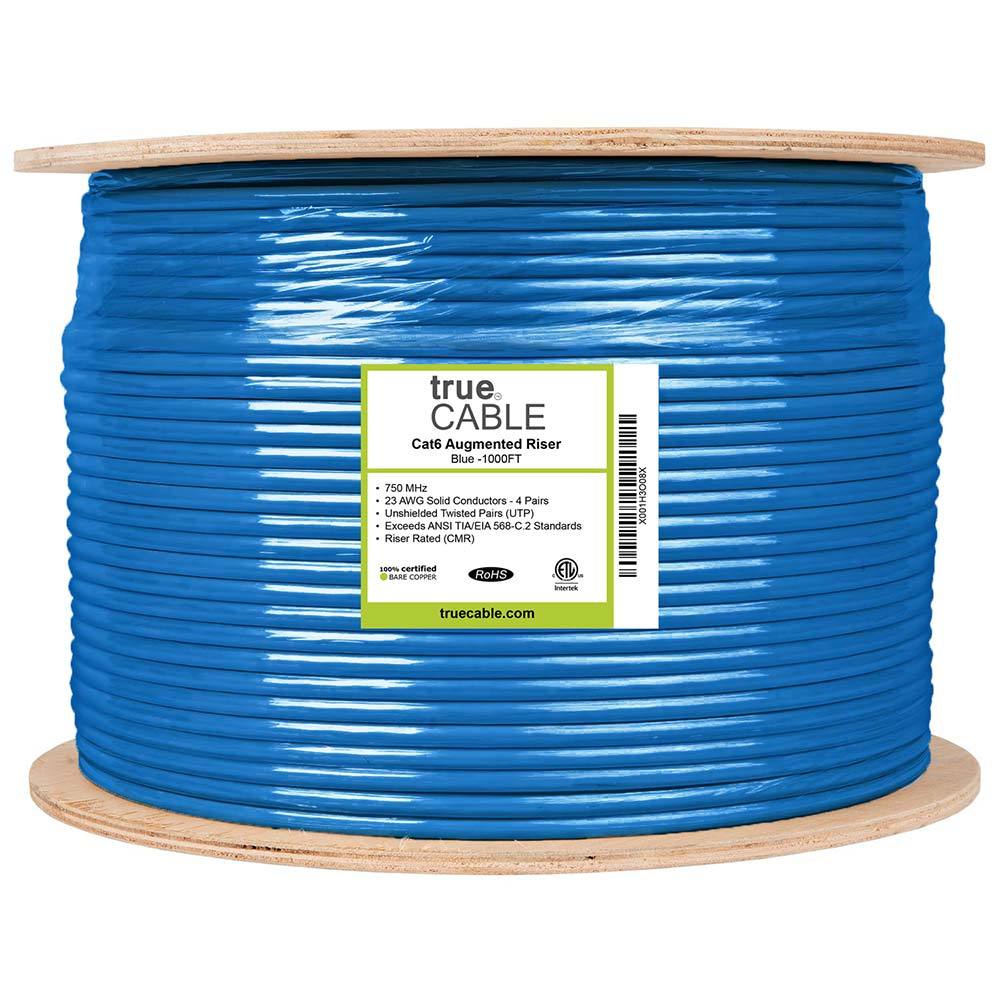
Cat6A unshielded riser cable for structured cabling in ordinary home and office pathways
Key details
- 10-gig capable category with solid bare copper conductors
- Lower complexity than shielded installs because there is no shield continuity to maintain
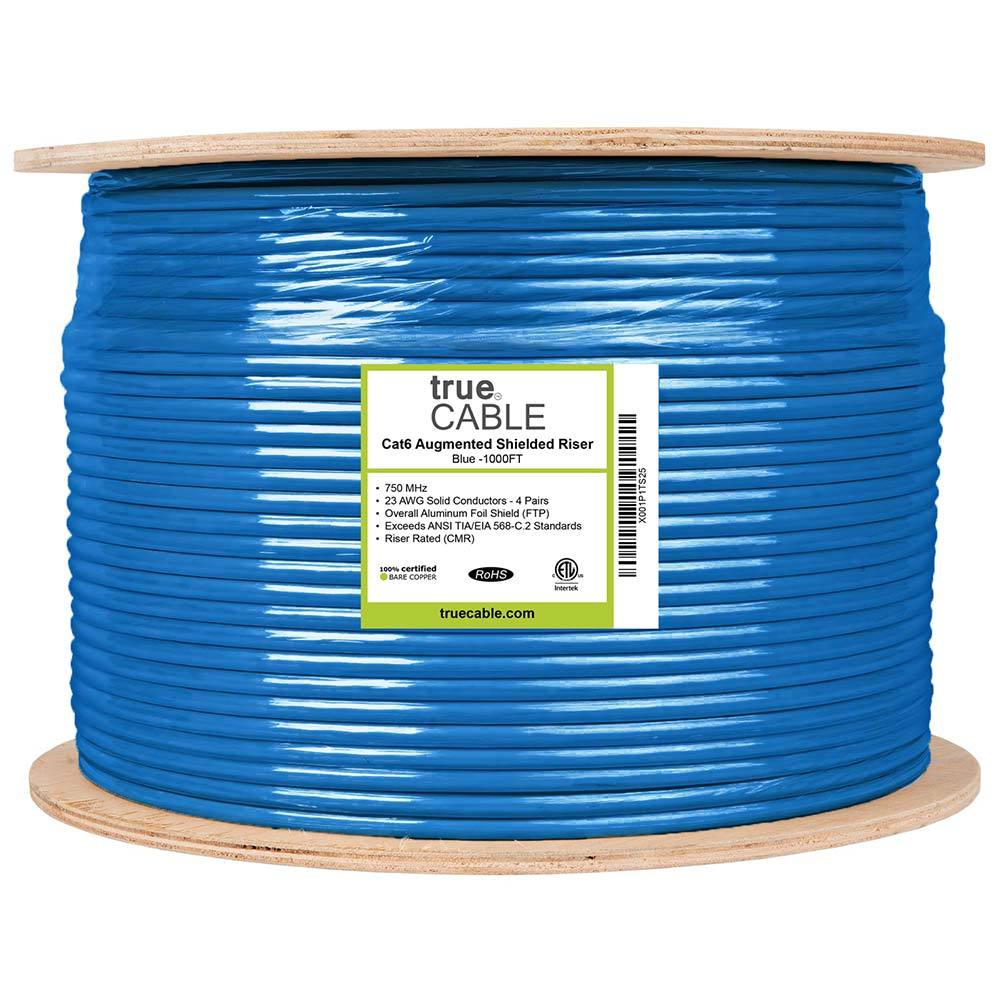
Shielded Cat6A bulk cable for EMI-prone indoor pathways
Opens search results. Match the model and bundle before ordering.
Find options on AmazonKey details
- Useful when the environment and grounding plan justify shielding
- Requires matching shielded terminations and a proper bonding path to work as intended

trueCABLE / equivalent
Shielded 24-Port Keystone Patch Panel
Provides the hardware path needed to terminate and bond shielded cabling correctly
Opens search results. Match the model and bundle before ordering.
Find options on AmazonKey details
- Useful reminder that shielded cable is a system, not just a spool choice
- Best paired with shielded jacks and an actual rack bonding plan

Klein Tools
Klein Tools VDV526-100 LAN Cable Tester
A basic wiremap check for an accessible, disconnected Ethernet run when you can reach both ends.
Before you buy: Use only on unpowered cable with permission or after taking possession. It finds opens, shorts and miswires, but does not certify cable speed or replace a professional test report.
Key details
- Verifies pinout and continuity on Ethernet runs
- Remote terminator for one‑person testing
- Useful when validating new backhaul runs
Shielded vs unshielded checklist
- Start with the pathway, not the marketing language on the spool.
- Use unshielded cable as the default for ordinary homes and offices.
- Choose shielded cable only when the route has a real EMI or specification reason.
- If the design is shielded, include shielded jacks, patch hardware, and bonding.
- Do not assume shielding fixes bad routes, bad terminations, or weak Wi-Fi design.
- Ask the installer to explain why shielding is required on this exact project.
- Make the quote spell out the grounding or bonding plan when shielded cable is specified.
- Test every run after termination regardless of whether the cable is shielded or unshielded.
FAQs
Is shielded Ethernet cable better than unshielded cable?
Not by default. Shielded cable is better only when the environment has enough electrical noise to justify it and the system is designed correctly from end to end.
Should I use shielded Ethernet cable in my house?
Usually no. In most homes, unshielded Cat6 or Cat6A is the better answer because the pathways are not electrically noisy enough to justify shielding complexity.
Does shielded Ethernet cable need special connectors?
In a true shielded installation, yes. Shielded cable is normally paired with shielded jacks, shielded patch hardware, and a bonding path so the shielding works as intended.
Can shielded cable improve network speed?
Not by itself. Shielding helps with interference control, not headline speed. Category, run length, terminations, and hardware still determine network performance.
What is the biggest mistake people make with shielded cable?
Treating it like a premium spool upgrade instead of a full system decision. If the route does not need shielding or the bonding path is missing, the extra complexity usually adds little value.
References
Plan the project with a site visit
Confirm wiring, equipment, placement, and installation scope before hardware is locked in.