

- Quick summary
- What is the Sonos Amp Multi used for?
- When is the regular Sonos Amp the better choice?
- Should you use in-ceiling, in-wall, or wireless Sonos speakers?
- How do you calculate Sonos zones and speaker counts?
- How should you wire and rack a Sonos whole-home audio system?
- Should you mix Amp Multi and Amp in one house?
- What does Sonos Amp Multi vs four Amps cost in 2026?
- Are there cheaper alternatives to Sonos for a single-room retrofit?
- Reference products mentioned in this guide
- Mistakes That Make Sonos Whole-Home Audio Feel Worse
- Next Step
- FAQs
- References
Quick summary
If you are comparing Sonos Amp Multi vs Amp for a real whole-home audio project, the practical answer is straightforward: choose Amp Multi when the project has 3 to 4 architectural music zones that belong together in one rack, choose regular Sonos Amp when you are building one room at a time or any room that needs TV audio over HDMI ARC, and choose wireless Sonos speakers instead of cutting ceilings when the room may change or the retrofit path is difficult. Amp Multi is a rack-density product for multi-zone architectural audio. Amp is still the more flexible room-by-room product for kitchens, patios, offices, and TV rooms.
If you are still sketching the broader house plan, start with the room-by-room Sonos planning guide. This article answers the narrower but more expensive question: which amplifier strategy makes sense before you cut drywall, wire the rack, or buy the wrong number of zones.
| Category | Amp Multi | Amp |
|---|---|---|
| Best fit | 3 to 4 centralized architectural audio zones in one rack | Single zone, staged retrofit, or TV-connected room |
| Amplified outputs | 8 independently configurable outputs | 1 stereo zone or dual mono |
| Power | 125 W per channel at 8 ohms, all channels driven | 125 W per channel at 8 ohms |
| TV audio | Not the current public Sonos TV-room path | HDMI ARC for TV audio |
| Cooling | Fanless GaN / Class-D / PFFB design | Passive cooling with advanced heatsink |
| Rack footprint | Single 2U rack-mounted chassis | Separate compact chassis, usually added one room at a time |
| Networking | Ethernet or Wi-Fi 6 | Ethernet or 2.4 GHz Wi-Fi |
| Public pricing signal | Quote-led; no public Sonos MSRP checkout path | $799 MSRP on Sonos.com |
What is the Sonos Amp Multi used for?
The Sonos Amp Multi is used for centralized architectural audio systems that need up to four distinct zones from one rack-mounted chassis.
It is not just "Amp, but newer." It is a different class of product aimed at distributed-audio installs where several passive-speaker zones already terminate in one equipment location. In that environment, one multi-zone amplifier is cleaner than stacking separate room-level amplifiers.
Sonos says Amp Multi can handle up to four configurable zones in one unit, can stream up to four audio sources simultaneously, and can power up to three Sonos Architectural speakers per output, or 24 total, when you use Optimize Sonos Speakers with Sonos Architectural speakers. Sonos also highlights GaN, Class-D amplification, post-filter feedback (PFFB), and a fanless design. That combination matters in real racks because heat, noise, and power density become more important once several zones live together in one closet.
The physical design reinforces that use case. Sonos lists Amp Multi as a 2U rack-mount product with 5.4 W idle power consumption and Wi-Fi 6 or Ethernet connectivity. Those are rack-room details, not casual one-room-upgrade details.
Sonos also leans into software flexibility. Its current Amp Multi page says each output can be assigned to any zone, which is the feature many installers will think of as virtual zoning. With four separate Amps, the wiring and hardware layout usually define the zone structure. With Amp Multi, the output-to-zone assignment is more fluid inside the app, which makes late-stage changes easier when a client wants to regroup rooms without rewiring the rack.
That flexibility extends to tuning. Sonos's current Amp Multi page and January 2026 newsroom announcement both call out ProTune, a manual optimization tool for low-impedance passive speakers. Sonos says ProTune includes a 10-band parametric EQ plus per-channel gain trim, delay, and high-pass controls. That moves Amp Multi closer to the kind of output-by-output tuning control integrators expect in more custom rack systems.
There is also a buying reality to keep straight. As of April 6, 2026, Sonos still lists Amp Multi as Coming soon and routes buyers to Get a quote instead of showing a public checkout MSRP. The planning logic is real now, but the standard retail-buy path is not.
Here is the practical difference:
| Option | What it is best at | What it does not replace cleanly |
|---|---|---|
| Amp Multi | Rack-based distributed music across several architectural zones | One-room TV zones that expect HDMI ARC |
| Sonos Amp | One stereo passive-speaker zone, patio zone, or TV room | Dense multi-zone rack projects where box count matters |
| Wireless Sonos speakers | Fast retrofits and flexible rooms with no speaker wire | Hidden architectural audio with invisible speakers |
Amp Multi is a strong planning signal for 2026, but the official Sonos store still shows it as coming soon on April 6, 2026. If your project starts now, regular Amp is still the easier immediate-buy path unless your installer is already quoting Amp Multi directly.
When is the regular Sonos Amp the better choice?
The regular Sonos Amp is the better choice for single-zone music spaces, staged retrofits, and any room that needs TV audio via HDMI ARC.
Sonos lists Amp at $799 and explicitly positions it as the component that powers passive speakers and handles TV audio over HDMI ARC. That alone keeps it relevant even in houses that may eventually use Amp Multi elsewhere. If a room has one passive-speaker zone and a TV on the wall, Amp is still the clearer answer.
Regular Amp usually wins when the project looks like one of these:
- One kitchen, office, or patio zone with passive speakers
- One TV room using architectural speakers instead of a soundbar
- A staged renovation where one zone goes in now and the rest waits
- A retrofit where rack space exists, but ceiling access is limited
- A house where some rooms may eventually switch from passive to wireless Sonos
It also wins when flexibility matters more than density. Multiple single-zone Amps take more rack space than one multi-zone chassis, but they are easy to phase in, easy to dedicate to specific rooms, and easier to replace one room at a time without redesigning the entire house.
That is why the smartest 2026 Sonos plans are often hybrid plans:
- Amp Multi for the ambient music zones
- One or more regular Amps for TV rooms or special-purpose zones
- Port when an existing receiver or amplifier is worth keeping
If the room has a screen on the wall and the audio path has to behave predictably with TV sources, do not assume Amp Multi is the cleaner answer just because it is newer. Based on Sonos's current public pages, Amp is still the TV-room tool.
Should you use in-ceiling, in-wall, or wireless Sonos speakers?
Use in-ceiling speakers for discreet ambient coverage, in-wall or traditional speakers for TV-first rooms, and wireless Sonos when flexibility matters more than invisibility.
Many planning problems start when speaker style is chosen before room purpose. Architectural speakers are best suited to spaces where the goal is even music coverage and a clean visual result, not maximum placement flexibility.
Sonos's own in-ceiling guide is useful here because it is honest about the tradeoff. In-ceiling speakers disappear visually and spread sound evenly, but they are harder to move later and usually deserve professional installation. That tradeoff is worth it in kitchens, hallways, dining rooms, covered patios, and open-plan spaces where you want the room to feel filled with music instead of dominated by equipment.
They are less ideal when:
- the room layout may change a lot
- the house is finished and patch work will be painful
- you want the clearest dialogue anchoring to a TV
- you may move soon and do not want to leave the speakers behind
For a theater or TV-first room, in-wall or ear-level speakers usually make more sense than ceiling-only front channels. For a casual music room, kitchen, or circulation space, in-ceiling is often a good fit.
Here is the simpler buying rule:
| Room type | Best fit | Why |
|---|---|---|
| Kitchen, dining room, hallway, open-plan ambient music | In-ceiling | Even coverage, clean look, low visual clutter |
| Living room with serious TV use | Amp + in-wall or traditional speakers, or a soundbar route | Better dialogue anchoring and TV integration |
| Bedroom, office, flex room, rental-friendly space | Wireless Sonos | No ceiling cuts, easy relocation, faster install |
| Dedicated media room | Not ceiling-first for the front stage | The room deserves speaker placement around the screen, not just above it |
If you want the built-in look, Sonos's current in-ceiling options also force one more useful choice: 6-inch or 8-inch speakers.
| Option | Best fit | What Sonos lists | Planning note |
|---|---|---|---|
| 6-inch pair | Smaller rooms or tighter ceiling depth | 36 Hz-20 kHz ±3 dB, 90° coverage, 4.73" mounting depth | Easier fit in tighter ceilings and smaller zones |
| 8-inch pair | Larger rooms, higher ceilings, stronger bass expectations | 29 Hz-20 kHz ±3 dB, 100° coverage, 5.32" mounting depth | Better low end and wider coverage, but needs more depth |
Ceiling depth, cutout size, and coverage matter more here than minor spec-sheet differences.
How do you calculate Sonos zones and speaker counts?
Calculate zones based on independent control needs, then size speaker count by the square footage and shape of each zone.
A zone is a control decision. A speaker count is a coverage decision.
Sonos says many small rooms up to 150 square feet can work with one pair of in-ceiling speakers, while larger rooms up to 500 square feet may need six or more speakers. That is speaker coverage guidance, not zone guidance. A large kitchen and family room might still be one Sonos zone even if it uses multiple speakers. What matters is whether people in those areas actually need different audio at the same time.
Use this framework:
| House pattern | Typical speaker plan | Typical zone plan |
|---|---|---|
| Small kitchen | 1 pair of in-ceiling speakers | 1 zone |
| Open kitchen + family room | 2 to 3 pairs depending on size and ceiling height | Usually 1 shared zone |
| Main floor with kitchen, dining, and patio | 3 physical areas | Often 2 to 3 zones depending on lifestyle |
| Whole first floor plus bedrooms | Several speaker pairs | Separate quiet/private zones usually matter |
The right question is not "How many speakers can this amplifier power?" The right question is "How many independently controlled areas does this family actually need?"
A few rules keep the design sane:
- If two spaces are usually used together, they can often stay one zone
- Bedrooms and offices should usually be their own zones
- Outdoor areas deserve independent volume and timing control
- Do not turn every pair of speakers into a separate zone unless the household will really use that control
Sonos also adds one subtle but important constraint for architectural zones: if you want the most consistent DSP and Trueplay optimization on one Amp, the connected Sonos Architectural speakers should be the same size. Mixing 6-inch and 8-inch models on one Amp complicates that path. In practice, that means deciding room by room whether you are standardizing on 6-inch speakers or using larger speakers only where they clearly help.
How should you wire and rack a Sonos whole-home audio system?
Home-run every passive-speaker zone back to one equipment location, even if you are not buying every Sonos component on day one.
Whether you end up with one Amp, several Amps, or Amp Multi plus one TV-room Amp, the system is easier to expand when the cable paths already land where they should.
For most homes, that means:
- speaker wire from each passive zone back to a rack, cabinet, or structured media location
- Cat6 to TVs, control locations, and any fixed Sonos endpoints
- ventilation and power planned before the rack is full
- labels that match real room names, not temporary construction names
In a finished retrofit, you do not always get the ideal rack path. That is one reason wireless Sonos still belongs in the conversation. A ceiling-speaker plan is harder to justify if it requires destructive patch work, boxed soffits, or an amplifier location no one can service later.
From a practical planning standpoint:
- Use regular Amp when the wiring naturally lands in one room or one nearby cabinet
- Use Amp Multi when multiple architectural zones already want to live together in one rack
- Keep TV zones separate from ambient audio logic unless there is a very strong reason not to
Network quality still matters too. Multi-room Sonos is usually more reliable on stable wired infrastructure than on a weak ISP router plus random wireless extenders. If the house already needs rack cleanup, access points, or structured cabling, fold that into the scope early through networking infrastructure services instead of treating audio as separate from the network underneath it.
If your gear will live behind millwork or in a media wall, the cable paths and airflow notes in home media wall setup and cable management are worth reviewing before the carpenter closes everything in.
Should you mix Amp Multi and Amp in one house?
Yes. In many residential projects, the best answer is a mixed system rather than an all-one-box system.
Amp Multi is not a universal replacement for Amp. It is a better answer for centralized architectural music zones. Regular Amp is still the better answer for single passive zones and TV-connected rooms.
That leads to a strong 2026 pattern:
- Use Amp Multi for the shared music backbone.
- Use Amp for rooms that need HDMI ARC, simpler staging, or room-specific independence.
- Use Port where an existing amplifier or AVR is already the right hardware.
That approach also ages better. If the family later changes one room, adds a porch, or repurposes an office, you are not forced to rethink the entire distributed-audio backbone to make one small change.
For the broader entertainment planning around TV rooms, speaker placement, and AVR-versus-soundbar choices, home entertainment theater audio guide covers the room-level side of the conversation. This article is about the multi-zone control layer that sits above that.
What does Sonos Amp Multi vs four Amps cost in 2026?
A one-zone architectural Sonos room is not cheap in 2026, and Amp Multi only makes financial sense when rack density and centralized control matter.
The most useful public Sonos pricing baseline is still regular Amp plus Sonos Architectural speakers, because Amp Multi remains quote-led rather than openly priced on Sonos.com.
Sonos currently lists:
- Amp at
$799 - 8-inch In-Ceiling Speakers by Sonos and Sonance at
$1,099per pair - Amp + In-Ceiling Set at
$1,803 - Port at
$499
That means the entry point for a clean one-zone architectural Sonos room is already close to two thousand dollars before labor, wire, drywall repair, painting, or rack work.
For the multi-zone comparison, the clearest hard number is still four standard Amps:
- 4 x Sonos Amp at $799 = $3,196
Amp Multi does not currently publish a public checkout MSRP, but early April 2026 dealer and waitlist signals have tended to land in the low-$4,000s. Treat that as a directional market estimate, not an official Sonos retail price. If that pricing holds, Amp Multi is not the cheaper hardware path on sticker price alone. The case for it is chassis consolidation, cleaner rack layout, fewer power and network touchpoints, and easier multi-zone management from one box.
| Hardware path | Pricing signal | Why you choose it | Why you may not |
|---|---|---|---|
| 1 x Amp Multi | Low-$4,000s directional market estimate | Cleaner rack density, one chassis, one network endpoint, one multizone backbone | No public Sonos MSRP checkout path, higher upfront hardware cost |
| 4 x Sonos Amp | $3,196 public Sonos MSRP | Easier staged deployment, clearer TV-room support, standard retail availability | More chassis count, more cable clutter, more shelf and outlet demand |
| Project shape | Public-hardware baseline | What usually changes the real cost |
|---|---|---|
| One kitchen or office ceiling zone | $1,803 set baseline | Ceiling access, wire path, rack or cabinet location |
| One patio zone on passive speakers | Amp plus passive outdoor speakers | Outdoor-rated wire, conduit, mounting, weather exposure |
| Two-zone retrofit | Usually two Amps or one Amp plus one wireless room | Patch work, staging, and whether both zones can home-run cleanly |
| Large new-build distributed audio | Quote-led around rack design and zone count | Speaker count, rack density, control, trim stage, and serviceability |
Because Amp Multi is still quote-led on April 6, 2026, the hardware comparison should be treated as a design decision first and a sticker-price exercise second.
If you are trying to reduce cost, the best lever is usually fewer, better-justified zones, not cheaper hardware in every room. A house with three zones people actually use will feel better than a house with seven zones no one can remember to manage.
We can map your zones, speaker counts, rack space, and TV-audio needs before hardware is locked in.
Are there cheaper alternatives to Sonos for a single-room retrofit?
Yes. Budget streaming amps now make more sense for one-room retrofits than they did a few years ago.
In 2026, WiiM Amp Pro, Bluesound Powernode, and Denon HEOS Amp-class products are part of the conversation for buyers who want one room of passive speakers and do not care much about the deeper Sonos ecosystem. That does not make them direct substitutes for a serious Sonos whole-home project. Sonos still earns its premium when the project depends on stable multiroom grouping, familiar app behavior across rooms, integration with existing Sonos households, and the Sonos Architectural tuning path.
For a single office, den, or secondary room, cheaper alternatives deserve a look. For a house that already lives inside the Sonos ecosystem or is being built around distributed architectural audio, they usually change the economics less than people hope.
Reference products mentioned in this guide
These cards are included as visual references for the main components discussed in the article.
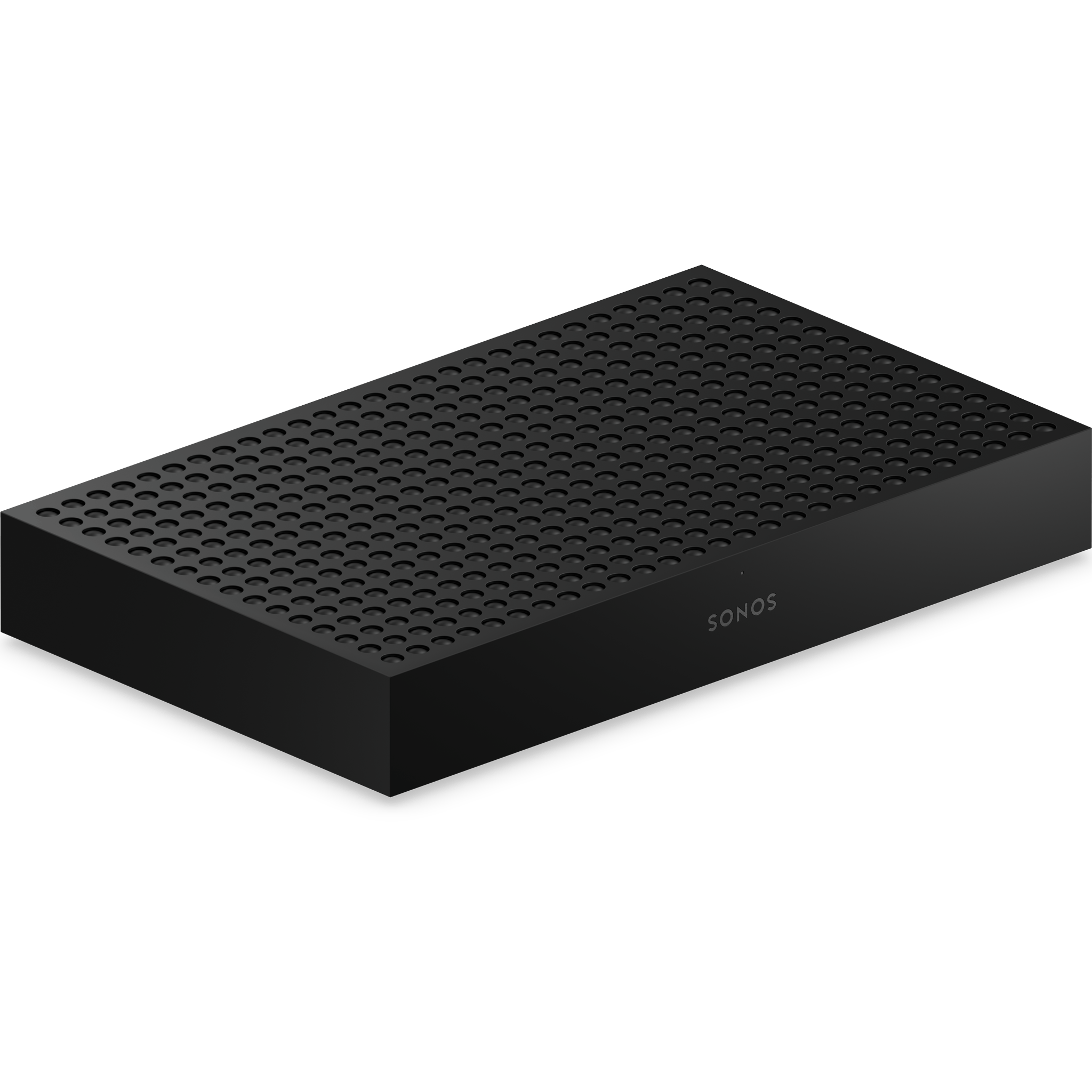
Eight amplified outputs at 125 W each for multi-zone installs
Opens search results. Match the model and bundle before ordering.
Find options on AmazonOfficial specificationsKey details
- Up to four configurable zones in a single chassis
- Built for professional rack installations with fanless cooling

A supportable amplifier for a wired patio speaker zone when the household already uses Sonos or wants app-based control.
Before you buy: This is one stereo zone, not independent patio and pool control. Confirm a protected location, speaker compatibility and cable routes before ordering.
Key details
- 125 W per channel into 8 ohms for architectural speakers
- HDMI ARC input for TV audio integration
- Sonos app control and multiroom playback with compatible Sonos products

Sonos / Sonance
In-Ceiling Speakers by Sonos and Sonance (Pair)
Passive architectural speaker pair for discreet built-in audio
Opens search results. Match the model and bundle before ordering.
Find options on AmazonOfficial specificationsKey details
- Unlocks custom DSP and Trueplay when paired with Sonos Amp
- Available in 6-inch and 8-inch versions for different coverage and depth needs

Adds Sonos streaming to an existing receiver or integrated amplifier
Key details
- Line-level input and output with digital coax output
- Best fit when the room already has amplification
Mistakes That Make Sonos Whole-Home Audio Feel Worse
- Treating every room as a separate zone before anyone has lived with the system
- Using in-ceiling speakers for TV-first rooms that really need ear-level placement
- Assuming Amp Multi replaces HDMI ARC TV-room use cases without checking the current spec path
- Cutting finished ceilings where a wireless Sonos speaker would have solved the actual problem
- Mixing speaker sizes on one Amp, then expecting the smoothest Sonos Architectural tuning workflow
- Skipping labels, service loops, and rack ventilation because the system "looks simple"
- Letting the audio plan outgrow the network plan underneath it
Next Step
If the hard part is no longer "Which speaker sounds better?" but "How many zones should this house really have, where should the rack live, and which rooms deserve architectural audio?" then the design phase is where the money gets saved.
- Explore home entertainment services
- Review the room-by-room Sonos planning guide
- Contact Data Wire Solutions
FAQs
Is Sonos Amp Multi better than Sonos Amp?
Sonos Amp Multi is better for centralized multi-zone architectural audio. Regular Sonos Amp is still better for a single passive-speaker zone, a staged retrofit, or a room that needs TV audio over HDMI ARC.
Can Sonos Amp Multi run TV audio?
Based on Sonos's current public product pages as of April 6, 2026, Amp is the component clearly positioned for TV audio with HDMI ARC. Amp Multi should not be treated as a drop-in TV-room replacement unless Sonos publishes that path explicitly for your build.
How many ceiling speakers can one Sonos Amp power?
Sonos says one Amp can reliably power up to three pairs of Sonos Architectural speakers, or six total, when wired in parallel. That does not mean every room should use the maximum count. Coverage and zone behavior still need to be designed around the space.
Are in-ceiling speakers worth it for a normal house?
Yes, when the goal is clean-looking ambient music in spaces like kitchens, hallways, dining rooms, and open-plan living areas. They are less compelling in rooms that may change layout often or in TV-first rooms where ear-level speaker placement matters more.
Should I use one big Sonos whole-home system or add rooms gradually?
Most retrofit projects are better when they are staged gradually, but wired as if the full system will exist later. New builds and major renovations are where larger centralized designs such as Amp Multi make the most sense.
What is the best Sonos setup for kitchen and patio audio?
A regular Sonos Amp is often the easiest answer if you want one kitchen ceiling zone or one patio zone. If the kitchen, dining, and patio areas all need architectural audio and independent control from one rack, that is where Amp Multi starts to make more sense.
References
Plan the TV, sound and wiring with a site visit
Walk the room with us to settle TV height, speaker placement and where the cables and equipment will go before anything is installed.